Food Safety in Canada: Legal Frameworks, Public Health, and Policy Challenges
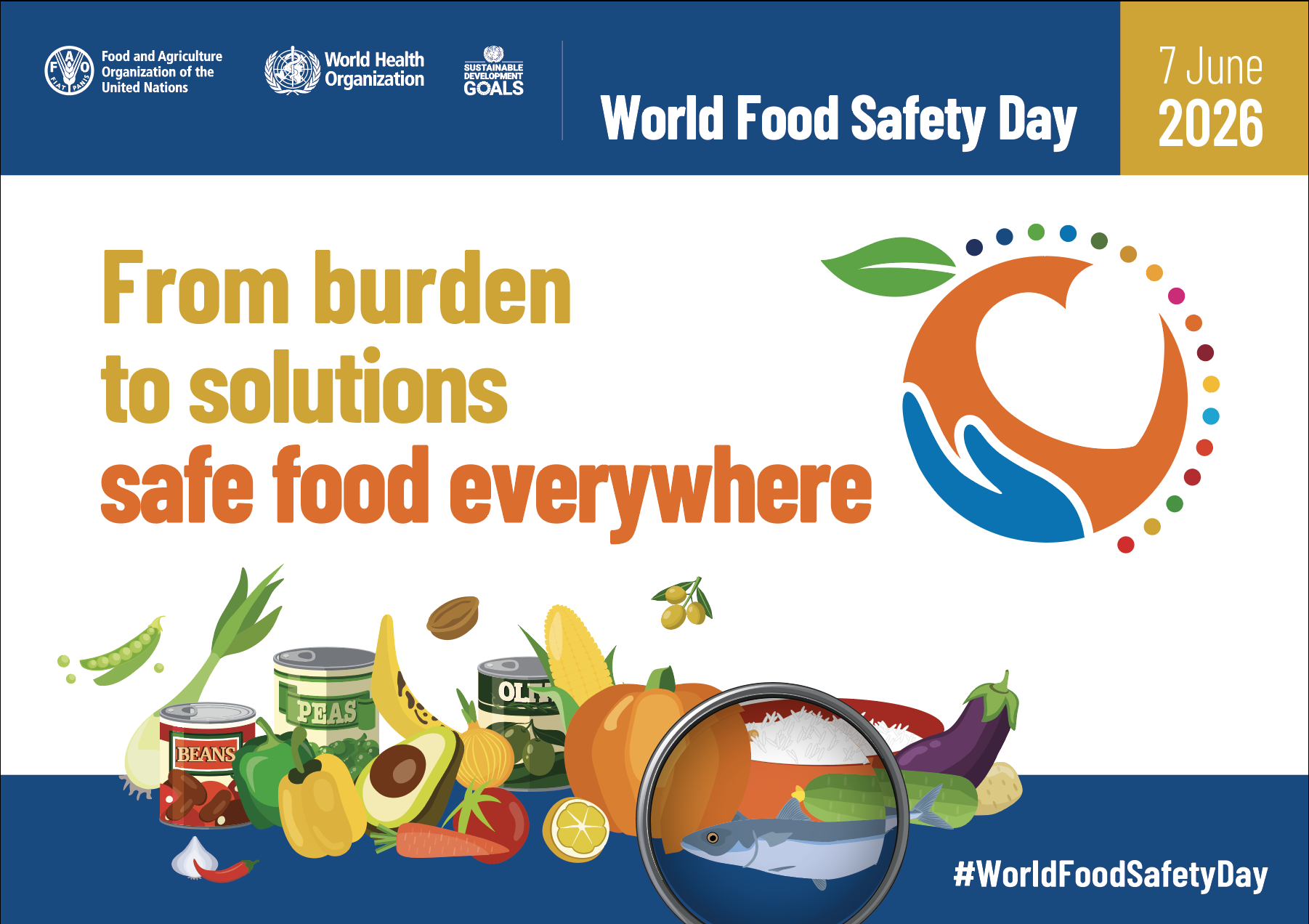
Image from https://www.fao.org/food-safety/news/detail/the-2026-world-food-safety-day-campaign-and-theme-has-launched/en?hl=en-IN
World Food Safety Day, observed annually on June 7, provides an opportunity to reflect on the legal, regulatory, and public health systems that underpin safe food. The 2026 theme “From burden to solutions: safe food everywhere” emphasizes a persistent challenge: translating evidence into effective legal and policy action.
New estimates from the World Health Organization (WHO) underscore the urgency. In 2021, unsafe food was responsible for approximately 866 million illnesses and 1.5 million deaths globally, with children under five facing nearly three times the risk of illness despite representing only 9% of the population. These findings draw on analysis of 42 major foodborne hazards across 194 countries between 2000 and 2021, providing an unprecedented evidence base to guide regulatory and policy interventions.
Against this global backdrop, Canada’s food safety system reflects a mature and multi-layered legal framework. Its effectiveness, however, depends not only on statutory design, but on coordination across federal, provincial, territorial, and local jurisdictions.
The Legal Foundations of Canadian Food Safety
In Canada, food safety legislation consists of the Food and Drugs Act (FDA) and the Safe Food for Canadians Act (SFCA), supported by the Safe Food for Canadians Regulations (SFCR).
The Food and Drugs Act is the foundation of federal food safety law. It authorizes Health Canada to establish science-based standards governing the safety and nutritional quality of food sold in Canada and prohibits the sale of unsafe or misleading products. The statute reflects a broad public health mandate encompassing both risk prevention and consumer protection.
The Safe Food for Canadians Act, fully in force since January 15, 2019, modernized Canada’s legislative framework by consolidating multiple statutes into a single, preventive and outcome-based system. The SFCA and SFCR apply primarily to food that is imported, exported, or traded interprovincially and introduce key regulatory requirements, including:
Licensing of food businesses
Preventive control plans addressing biological, chemical, and physical hazards
Traceability requirements across supply chains
This framework reflects a broader shift toward risk-based governance and preventive regulation, consistent with international food safety standards.
Regulatory Enforcement and Compliance
Canada’s model distinguishes, though not entirely separates, standard-setting and enforcement:
Health Canada develops policies, standards, and risk assessments under the FDA
The Canadian Food Inspection Agency (CFIA) enforces federal legislation through inspection, testing, recall, and compliance activities
CFIA’s compliance and enforcement approach is explicitly risk-based and graduated, relying on a continuum of actions that includes compliance promotion, inspection, and enforcement responses where necessary. Enforcement tools can include product seizure, administrative penalties, licence suspension, or referral for prosecution, depending on the severity of non-compliance.
This model reflects established administrative law principles, including proportionality, transparency, and structured discretion.
The Critical Role of Provinces, Territories, and Local Authorities
While federal statutes provide the backbone of Canada’s food safety system, provincial and territorial governments play a central role in regulating food safety at the point of service and local distribution.
Under Canada’s constitutional framework, provinces are responsible for public health, property and civil rights, and matters of a local nature. In the food context, this includes jurisdiction over:
Restaurants and food service establishments
Retail food environments
Local food production and intraprovincial distribution
Each province and territory maintains its own legislative system. For example, jurisdictions rely on statutes such as public health acts, food safety acts, and food facility regulations, supported by detailed operational standards. In Saskatchewan, for instance, food safety oversight is grounded in The Public Health Act, 1994, and The Food Safety Regulations, alongside specific standards for food facilities.
Enforcement is typically carried out by environmental public health professionals (public health inspectors or environmental health officers), who conduct inspections, investigate complaints, and respond to potential foodborne illness outbreaks.
This multi-level structure creates a layered regulatory model:
Federal law governs interprovincial and international trade;
Provincial and territorial law governs local production, retail, and food service;
Health or similar authorities deliver inspection and enforcement functions.
Canada’s food safety legal framework is designed to sustain public confidence in the food system and its safety. Rather than fragmentation, this model reflects functional specialization, allowing oversight to occur at the level closest to the relevant risk.
Conclusion
World Food Safety Day reminds us that safe food is a shared responsibility—and a shared opportunity. The latest global data shows just how urgent this work remains, but it also highlights where solutions are already taking shape. In Canada, strong laws, coordinated oversight, and dedicated public health professionals form the backbone of our food safety system. Still, continued progress depends on collaboration across sectors, disciplines, and jurisdictions.
This is where organizations like the Canadian Association for Food Law and Policy (CAFLP) play a vital role. By connecting legal experts, researchers, students, and practitioners, CAFLP helps turn evidence into action through supporting dialogue, strengthening education, and advancing the field of food law and policy in Canada. On World Food Safety Day and beyond, we’re reminded that protecting the food system is not just a regulatory task, but a collective effort to build safer, healthier communities everywhere.
Resources/Further Reading
Canadian Food Inspection Agency. (2020). Compliance and enforcement policy. Government of Canada. https://inspection.canada.ca/en/inspection-and-enforcement
Canadian Food Inspection Agency. (2025). Food safety standards and guidelines. Government of Canada. https://inspection.canada.ca/en/food-safety-industry/food-safety-standards-guidelines
Canadian Food Inspection Agency. (n.d.). SFCR handbook for food businesses. Government of Canada. https://inspection.canada.ca/en/food-safety-industry/toolkit-food-businesses/sfcr-handbook-food-businesses
CIDRAP. (2026). WHO attributes 866 million yearly illnesses, 1.5 million deaths around world to unsafe food. Center for Infectious Disease Research and Policy. https://www.cidrap.umn.edu/foodborne-disease/who-attributes-866-million-yearly-illnesses-15-million-deaths-around-world
Government of Canada. (2023). Safe Food for Canadians Act (S.C. 2012, c. 24). https://laws-lois.justice.gc.ca
Government of Canada. (2025). Safe Food for Canadians Regulations (SOR/2018‑108). https://laws-lois.justice.gc.ca
Health Canada. (2024). Canada’s Food and Drugs Act and regulations. Government of Canada. https://www.canada.ca/en/health-canada/services/food-nutrition/legislation-guidelines/acts-regulations/canada-food-drugs.html
United Nations News. (2026, June 4). Unsafe food causes millions of illnesses and deaths globally: WHO report. https://news.un.org/en/story/2026/06/1167644
World Health Organization. (2026). Food safety fact sheet. https://www.who.int
World Health Organization. (2026, June 4). Unsafe food causes 866 million illnesses and 1.5 million deaths annually, young children at highest risk. https://www.who.int/news/item/04-06-2026-unsafe-food-causes-866-million-illnesses-and-1.5-million-deaths-annually--young-children-at-highest-risk
World Health Organization. (n.d.). Food safety and inspection transparency archive (Archived CFIA transparency page). Library and Archives Canada. https://epe.lac-bac.gc.ca/100/206/301/cfia-acia/2011-09-21/inspection.gc.ca/english/agen/transp/comp/compe.shtml?nodisclaimer=1