CAFLP Conference Recap: Navigating Regulatory Trends in Plant-Based and Cellular Agriculture
As Canadian grocery aisles increasingly fill with oat beverages, pea-protein nuggets, and meatless “ground beef,” the regulatory system governing these innovations is being pushed into new territory. Plant-based foods are now firmly part of mainstream diets, and cellular agriculture, food grown from cells or microorganisms rather than animals, is quickly moving from science fiction to commercial reality. The momentum behind these innovative products is fueled by consumer desires related to sustainability, ethical considerations regarding factory farming, and simple curiosity to try new food formats. But regulation must ensure safety, transparency and fair competition.
At the 2025 Canadian Food Law and Policy Conference in Ottawa, Fasken Martineau DuMoulin LLP Associate David McLauchlan unpacked how Canada’s food regulatory landscape is evolving to manage these rapidly expanding sectors. His talk explored what counts as “plant-based” or “cell-cultured,” how these products are currently assessed by regulators, and the emerging policy questions that will shape the next decade of Canadian food law.
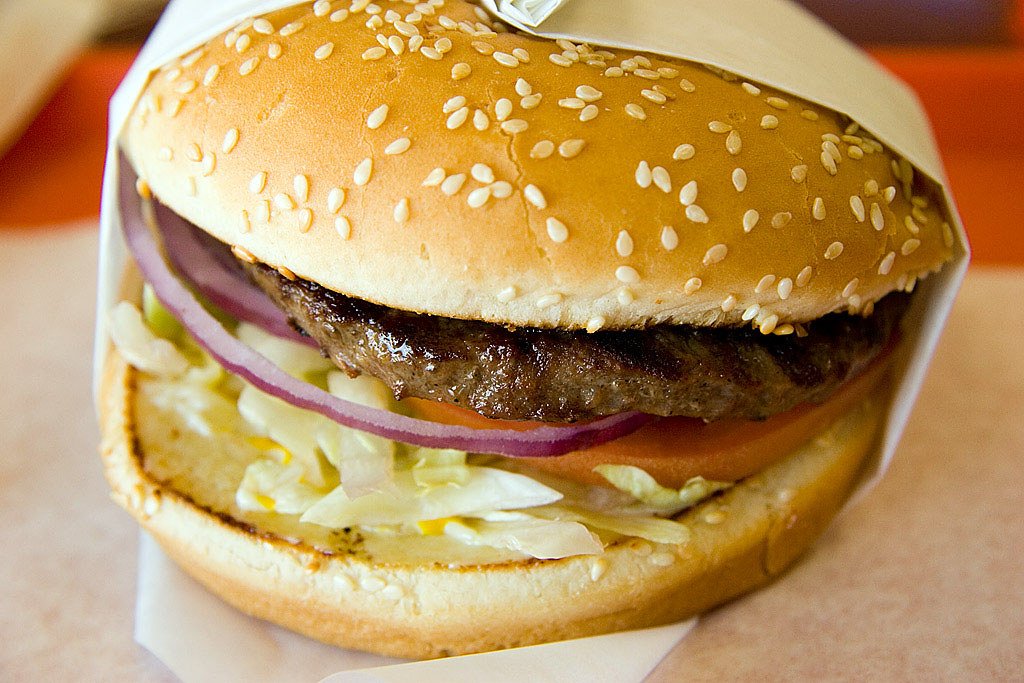
"Best Burger Hamburger" by pointnshoot is licensed under CC BY 2.0.
1. Plant-Based Foods: Definitions and Regulatory Boundaries
Plant-based foods are not new, but their reformulated, highly engineered versions designed specifically to replace animal-derived foods are a fast-growing sector. These products are made entirely from plant ingredients but aim to replicate the taste, functionality, or nutritional role of meat, dairy, or eggs. Think soy “milk” instead of cow’s milk, or vegetable-based “burgers” instead of beef patties (as will be discussed below, the use of these terms is controversial).
Canadian consumers have quickly embraced these products. According to Agriculture and Agri-Food Canada, non-animal-derived protein products (such as soy protein, pea protein, and vegetable protein) accounted for roughly 75% of total protein volume sales in terms of market shares in 2023 (Agriculture and Agri-Food Canada), reflecting strong demand from flexitarians, vegans, and environmentally conscious shoppers.
Simulated Meat Products: What Counts as “Meat-Like”?
In Canada, plant-based products intended to mimic traditional meats fall under the “simulated meat products” category. A product that “does not contain any meat product, poultry product or fish product” yet “has the appearance of” meat product is regulated as a simulated meat or simulated poultry product. Once a product meets this definition, several regulatory requirements apply:
The word “simulated” must appear in the product name.
Packaging must state "contains no meat."
There are minimum protein and fortification requirements, so these foods deliver nutritionally, not just in taste or appearance.
These requirements are meant to ensure transparency for consumers and nutritional adequacy for products that appear to replace meat. The move toward compositional standards also reflects increasing policy attention to nutrient density rather than appearance alone.
Industry Pushback and the “Impression” Test
Despite clear rules, many companies are reluctant to use the term “simulated.” Manufacturers worry that the word sounds artificial or implies inferiority. However, the Canadian Food Inspection Agency (CFIA) emphasizes that compliance is not optional. CFIA guidance clarifies that classification depends not just on appearance, but also texture, odour, and overall consumer impression.
2. The Ongoing Debate: What Can Be Called “Milk”?

"Glass of Milk" by Push Doctor is licensed under CC BY 2.0.
Plant-based beverages such as oat, soy, and almond face another regulatory wrinkle. They do not meet the prescribed standard of identity for milk, which is a regulated term reserved for lacteal secretions of animals such as cows or goats, due to nutrient content and designated standards.
Draft Guidance (2024): Focus on Representation
Draft regulatory guidance released in 2024 signalled a shift toward regulating how plant-based alternatives present themselves, placing more emphasis on compositional standards, packaging, claims and marketing. Regulators will need to scrutinize:
Product names,
Images on packaging,
Ingredient lists,
Claims (e.g., “dairy-free,” “creamy like milk”),
Overall impression created for consumers.
The objective remains consistent: avoid misleading consumers regarding a product’s nature, composition, or intended use. This emphasis on preventing confusion is exemplified in the CFIA's proposed guidance on how to label and represent Plant-Based Alternatives to Egg Products. This guidance provides a clear example of how regulators assess representation to prevent misleading impressions. This guidance provides examples of how to determine whether a plant-based product is being presented as an “egg” or an “egg substitute”. These principles could be mimicked to regulate "milk" or "milk substitute" products.
3. Cellular Agriculture: Navigating New Ground
Cellular agriculture products are not yet a defined category in Canadian law, but they are currently regulated as “novel foods” under Division 28 of the Food and Drug Regulations. While the term "cellular agriculture" is absent from the regulations, it is used in associated guidance documents. Cellular agriculture, more commonly discussed as “lab-grown” or “cultivated” meat, is just emerging in Canada. There are two general sub-types:
1. Lab-cultivated / cell-cultured meat: animal cells grown in bioreactors to create meat or meat-like tissue.
2. Precision fermentation: microorganisms (for example, yeast or bacteria) engineered to produce specific proteins or nutrients; for instance, a yeast producing whey protein unattached to a cow. In effect, think of cheese without cows.
In a key milestone from 2024, Remilk’s animal-free β-lactoglobulin (a major whey protein) became the first precision fermentation dairy protein approved for sale in Canada, as reported in the Dairy Reporter and theNational Post. This is made by yeast, not cows, literally grown in a vat. This marked the first entry of a fermentation-derived dairy identity into the Canadian market, signalling major potential for “animal-free dairy.”
Cellular agriculture products fall under Canada’s “novel food” category, meaning they must undergo a thorough pre-market review before they can be sold. Companies are required to submit extensive information on how the food was developed, manufactured, and assessed for safety, which Health Canada evaluates solely for safety, not flavour, texture, or consumer appeal. Although the Food and Drug Regulations (FDR) outline a review window of 45 to 90 days, updated guidance suggests that actual decisions may take up to 410 days, reflecting the complexity of these technologies and the highly individualized nature of each assessment (Health Canada). This widening gap between statutory and practical timelines has raised industry questions about how long future cultivated and precision-fermented products should realistically expect to wait for approval.
All the usual food regulations, like Good Manufacturing Practices (GMP) and Hazard Analysis Critical Control Point (HACCP), still apply. Draft guidance published in July 2024 gave more detail on what regulators want to see, making clear that each novel product will be assessed individually—no quick shortcuts for “just like” precedent.
4. Looking Forward: An Expanding Market, Evolving Rules
Plant-based products are here to stay, occupying a growing share of Canadian fridges. Cellular foods remain new and rare; the Remilk approval is currently the only known example, but expectations are high for more products to follow. For companies, the message is clear: compliance is mandatory, creativity welcome (just not on mandatory language). For consumers, the trend points toward more options and clearer labels, though the legal definition of “meat,” “milk,” and now “whey” might keep changing as fast as the products themselves.
As the boundary between agriculture, biotechnology, and food innovation expands, Canada is working to refine the laws that govern what we eat and how products are represented. Plant-based foods have gained a stable foothold, while cellular agriculture is only beginning to emerge. Still, behind every package of oat beverage or animal-free whey lies a complex interaction of science, regulation, and policy development.
The next time you walk past that new product in the dairy aisle—or the meat section—you'll know just how much law, science, and labeling ingenuity lies behind every label.
For more details on simulated meat regulations, see Canadian Food Inspection Agency’s Simulated Meat Product Guidelines.
Guidance on novel foods can be found at Health Canada’s Novel Foods Guidance.
* Ursula Azocha holds a Master's degree in Food Science from McGill University (MSc 2025) and has hands-on R&D experience in clean-label and functional food development. Her interest extends to food laws and regulatory affairs, supporting safe and innovative food systems.